
By Eng Orthodontics – Dr. Albert Eng, Dr. Ashlynn Schiro, Dr. Jared Error & Dr. Shane Hoelz
When it comes to achieving a beautiful, healthy smile, modern orthodontics offers more options than ever before. The two most popular treatments—traditional braces and Invisalign® clear aligners—both effectively straighten teeth, but they differ in comfort, appearance, lifestyle impact, and cost. At Eng Orthodontics, our expert team helps patients throughout Colorado choose the best treatment for their unique needs and goals.
Understanding the Basics
Braces
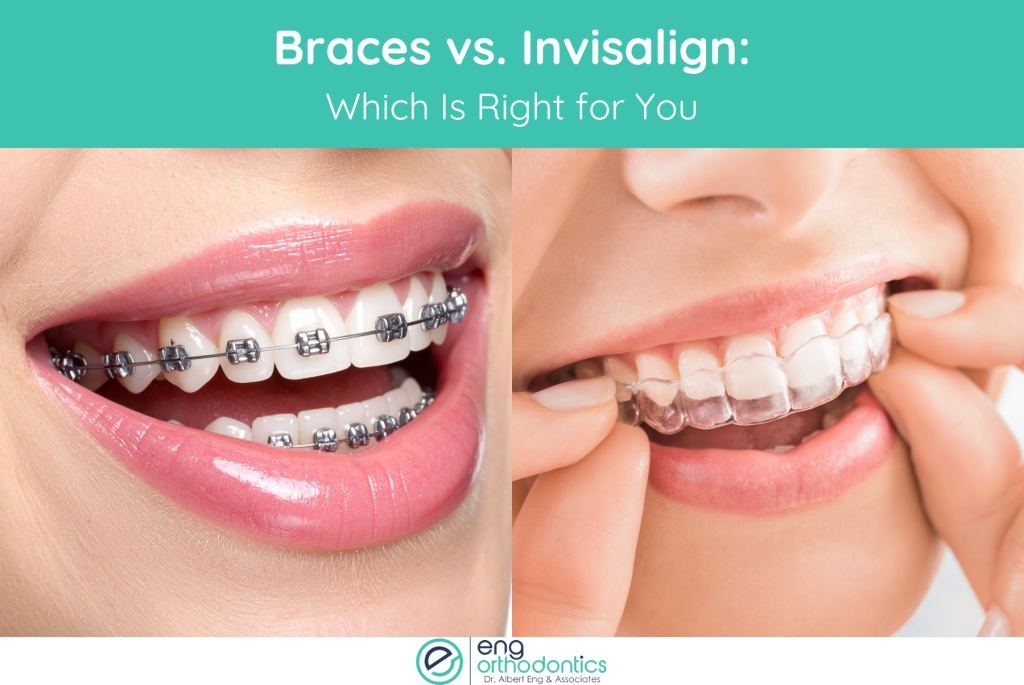
Traditional braces use metal or ceramic brackets and wires to gradually move teeth into the correct alignment. Today’s braces are smaller, more comfortable, and more discreet than those of the past. They’re ideal for treating complex bite issues or severe misalignments.
Invisalign®
Invisalign uses a series of clear, removable aligners that fit snugly over your teeth. Each set of aligners gently shifts your teeth into place over time. Invisalign is popular among teens and adults who want a more subtle, flexible option.
Key Differences Between Braces and Invisalign
| Feature | Braces | Invisalign |
| Appearance | Visible (metal or clear ceramic) | Virtually invisible |
| Comfort | May cause mild irritation from brackets/wires | Smooth plastic aligners, no metal parts |
| Maintenance | Brushing and flossing around brackets required | Remove to brush, floss, and eat |
| Dietary Restrictions | Avoid hard, sticky foods | No restrictions (remove aligners before eating) |
| Treatment Time | 18–36 months on average | 12–24 months on average, depending on compliance |
| Effectiveness | Ideal for all cases, including complex ones | Best for mild to moderate cases |
Both systems can create exceptional results—but your choice depends on lifestyle, dental health, and personal preferences.
How to Decide Which Treatment Is Right for You
- Severity of Misalignment:
Braces can handle the most complex orthodontic cases, while Invisalign is typically used for mild to moderate crowding, gaps, or bite issues. - Aesthetic Preferences:
If you prefer a low-profile, nearly invisible solution, Invisalign is ideal. However, for those who don’t mind visible braces—or want fun, colorful bands—traditional braces might be the way to go. - Lifestyle and Discipline:
Invisalign requires wearing aligners for 20–22 hours per day and removing them only to eat or brush. If you’re worried about losing aligners or forgetting to wear them, braces may be more reliable. - Budget and Insurance:
Costs are often similar, but can vary depending on case complexity and treatment time. Our team provides a clear estimate and helps maximize your orthodontic insurance benefits.
Why Patients Choose Eng Orthodontics
At Eng Orthodontics, we take pride in providing exceptional orthodontic care tailored to every patient. With four convenient Colorado locations—Brighton, Reunion, Fort Morgan, and Arvada—our experienced orthodontists and compassionate team deliver expert treatment in a welcoming, family-friendly environment.
We use the latest technology to ensure precise, efficient results and offer flexible financing to make orthodontic care affordable for everyone. Whether you choose braces or Invisalign, your smile is in trusted hands.
Frequently Asked Questions
Q: How do I know if I’m a candidate for Invisalign?
A: Invisalign works best for mild to moderate crowding, spacing, or bite issues. During your consultation, our orthodontists will evaluate your smile using digital scans to determine if you’re a good candidate.
Q: Are braces faster than Invisalign?
A: Treatment time depends on your specific needs. In general, both can achieve results in a similar timeframe, though braces may work faster for complex cases.
Q: Is Invisalign more expensive than braces?
A: The cost difference between braces and Invisalign is usually small. We’ll provide a detailed estimate and help you explore payment plans or insurance options.
Q: Can I switch from braces to Invisalign mid-treatment?
A: In some cases, yes. If your teeth have moved enough to make aligner treatment effective, we can transition you to Invisalign after evaluating your progress. Please note that there is a small lab fee involved when switching from traditional braces to Invisalign—or vice versa—mid-treatment to cover new materials and fabrication costs.
Q: Do braces or Invisalign hurt?
A: Some mild soreness or pressure is normal when your teeth first begin moving, but this typically subsides after a few days. Both modern braces and Invisalign are designed for comfort and gentle, consistent movement.
Q: How often will I need check-ups?
A: Braces typically require visits every 6–8 weeks for adjustments, while Invisalign patients are usually seen every 8–10 weeks for progress checks. These visits help ensure your treatment stays on track and your results are progressing as planned.
Schedule Your Free Consultation
If you’re considering braces or Invisalign, the best first step is a free consultation at Eng Orthodontics. We’ll evaluate your teeth, discuss your goals, and help you choose the treatment that fits your smile, budget, and lifestyle.
Contact Eng Orthodontics
Brighton Office
📞 (303) 498-0351
Reunion Office
📞 (303) 498-0351
Fort Morgan Office
📞 (970) 542-2500
Arvada Office
📞 (720) 800-9331